
You wake up tired, even after a full night’s sleep. Your hands tingle. Climbing the stairs leaves you breathless. You brush it off as “just getting older,” but what if your body is sending a warning sign you’ve been missing?
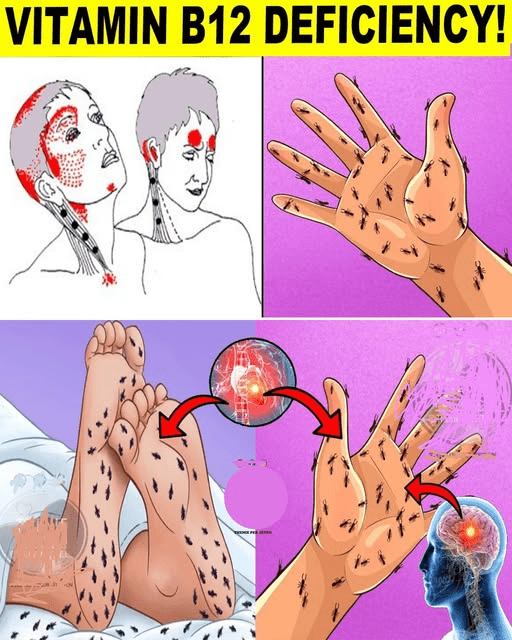
Here’s the surprising truth: Vitamin B12 deficiency is far more common than most people realize, especially among adults over 50. It creeps in slowly, often mistaken for stress, aging, or poor sleep. But left untreated, it can lead to serious — even irreversible — nerve and brain damage.
What’s worse, you might not even know it’s happening. Studies suggest up to 40% of older adults have low or borderline B12 levels, yet few get diagnosed in time.
So, what exactly happens when your body runs low on this essential vitamin — and how can you spot it before it’s too late? Let’s uncover the subtle, often-overlooked symptoms that should never be ignored.
Why Vitamin B12 Matters More Than You Think
B12 supports the myelin sheath, the protective coating around your nerves. When levels drop, that sheath starts to erode, causing nerve damage.
Left untreated, this can progress to balance issues, clumsiness, or even difficulty walking.
So if your limbs feel “asleep” more often than usual — don’t ignore it. Your nerves could be asking for help.
3. Pale or Jaundiced Skin
Ever noticed your skin looking paler than usual, or with a faint yellow tone? That’s another hidden clue.
Low B12 can reduce red blood cell production, leading to megaloblastic anemia — a condition where cells grow too large and break apart. The result: a shortage of healthy red blood cells, and that washed-out, tired look in your complexion.
If you pair pale skin with constant fatigue or dizziness, it’s time to get your B12 checked.


0 commentaires:
Enregistrer un commentaire